
- Compliance
- Webinars
2026 Outbound Compliance Shakeup: FCC Rule Changes, Caller ID + STIR/SHAKEN Updates, Stronger State Laws
Following the release of the FCC’s 9th Further Notice of Proposed Rulemaking (FNPRM), this Ahead of the Curve webinar for Q4 2025 breaks down what’s changing for outbound contact centers and performance marketers—and what’s still very much in flux going into 2026.
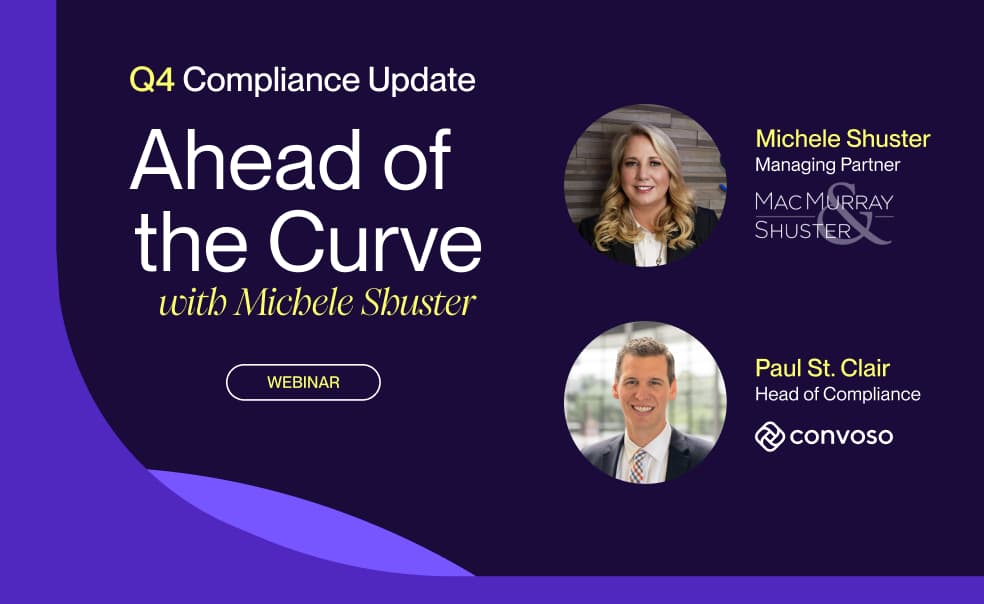
Compliance attorneys Michele Shuster, Managing Partner at MacMurray & Shuster LLP, and Paul St. Clair, Head of Compliance at Convoso, explain how proposed rules around international caller ID labeling, caller identity and rich call data, and STIR/SHAKEN enforcement could affect your calling strategy, vendors, and global operations.
They also unpack rising risk from state-level laws, private TCPA and privacy litigation, and carrier and iOS call screening, with practical guidance on how to protect your contact rates while staying ahead of regulators.
Key webinar takeaways
What’s inside the FCC’s 9th FNPRM—and what’s at stake
The 9th Further Notice of Proposed Rulemaking is not final yet, but it signals where the FCC may move in 2026 on robocall rules, caller identity, and international traffic.
Businesses should watch for Federal Register publication and be ready to participate in the comment period, especially if they rely on offshore call centers or complex dialing strategies.
International caller ID labeling could disrupt offshore operations
A key proposal would require foreign-originated calls to be labeled as international, and may limit the use of U.S.-based numbers by offshore call centers.
While aimed at scam traffic, this change could negatively affect legitimate global operations, consumer experience, and economic models for businesses that have moved support and sales overseas.
Caller identity, rich call data, and STIR/SHAKEN: more verification, more cost
The FCC is exploring whether to require richer caller identity information and potentially mandate specific technologies (like rich call data) for displaying logos and enhanced caller info.
Panelists emphasized that rich call data (RCD) is still expensive and unevenly supported, and mandating it may raise costs without clearly solving illegal robocall problems.
Robocall rule rollbacks don’t remove your risk
The FNPRM considers scaling back certain abandoned call requirements, including the 3% abandonment rate and recorded message rules for predictive dialers.
Even if the FCC softens its approach, the FTC and state regulators remain active—and it is not the time to relax compliance practices around dialing, consent, or recordkeeping.
State laws, privacy, and litigation are accelerating
States like Texas and Florida are driving more enforcement and private rights of action, including registration, calling time, and privacy-related violations.
Litigation under the TCPA, state telemarketing laws, and privacy statutes (such as California’s recording laws) is at some of the highest levels on record, including growing exposure for wrong-number and reassigned-number calls.
Vendor and traffic oversight matter more than ever
The FCC’s Robocall Mitigation Database and updated STIR/SHAKEN rules make it easier to cut off providers that don’t meet mitigation obligations, which can shut down all traffic flowing through them.
Contact centers must vet their vendors, dialers, and lead providers, ensure proper registration, and confirm that mitigation plans and due diligence are documented and current.
Technology changes (iOS and carriers) are reshaping contact rates
New iOS call screening features and carrier tools from providers like T-Mobile are increasing automatic spam filtering, silencing, and labeling of calls—especially from numbers not in a consumer’s contact list.
To maintain contact rates, outbound teams need a combination of strong compliance, solid caller ID reputation management, and platform capabilities that can respond to changing carrier and device behavior.
Practical steps for 2026: connect compliance, vendors, and technology
Review your consent and revocation flows, especially as revocation rules evolve and may affect both marketing and informational calls.
Audit your recording and AI monitoring disclosures, plus email and SMS content, for unfair or deceptive marketing risks.
Work with technology partners like Convoso to automate state calling windows, enforce DNC rules, and leverage tools—such as Convoso Ignite—that help protect caller ID reputation and contact rates while staying aligned with the emerging regulatory landscape.
Schedule a demo
Supercharge your sales with our AI-powered contact center platform.