

Reassigned Numbers and TCPA Compliance: Understanding the Risk of Wrong-Party Calls
 Paul St. Clair, Head of Compliance, Convoso
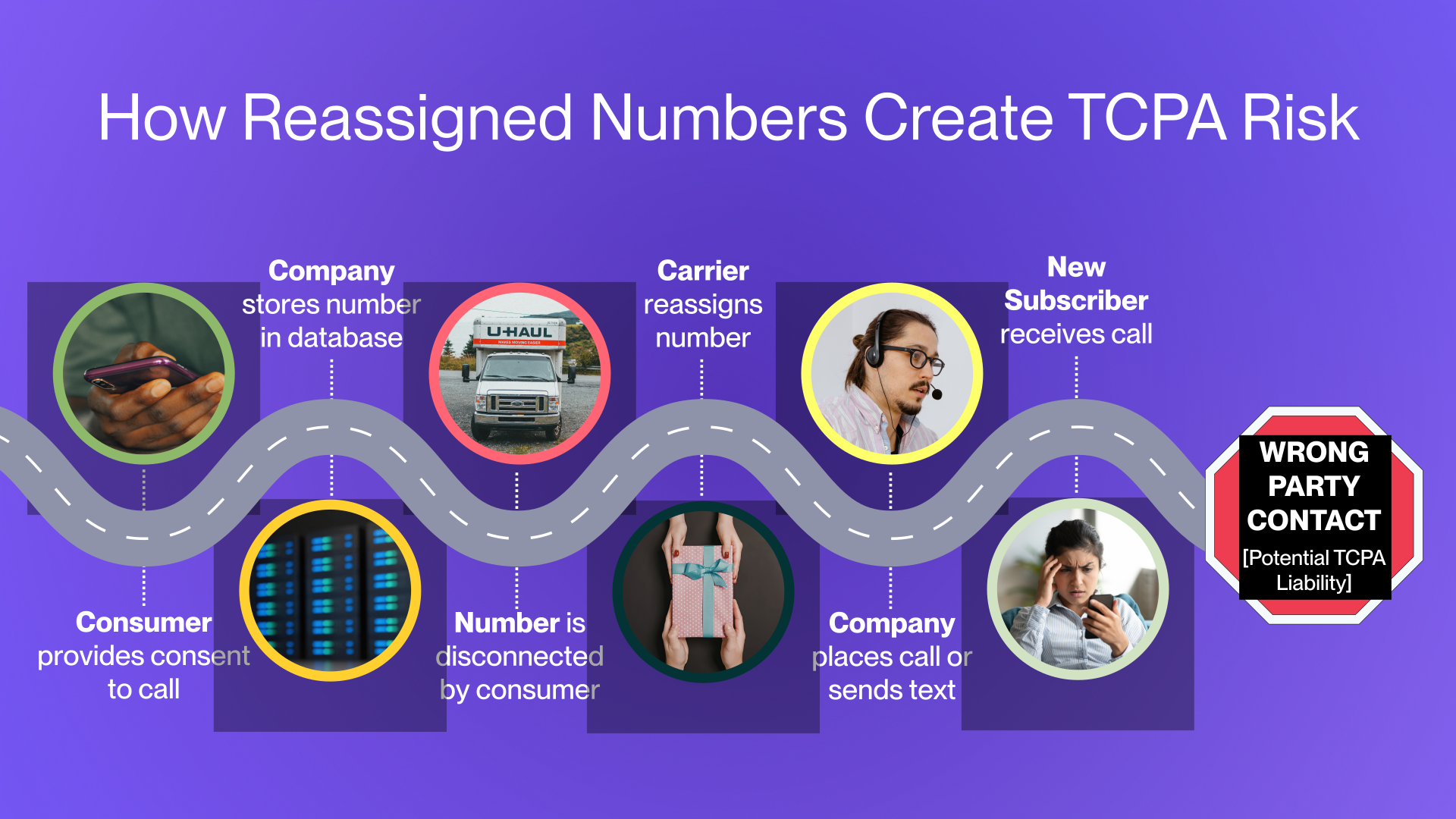
Reassigned numbers create TCPA risk when a phone number that once belonged to a consumer who gave consent is later assigned to a different subscriber. Calls or texts made after that reassignment may reach the wrong person, potentially creating liability if the new subscriber never consented.
For organizations that rely on outbound calling and texting, reassigned numbers represent a compliance risk that often remains invisible until a complaint, carrier review, or legal claim brings it to light.
Reassigned numbers compliance at a glance
A reassigned number occurs when a phone number changes subscribers.
Contacting the new subscriber may create TCPA liability if they never provided consent.
The FCC Reassigned Numbers Database (RND) allows callers to check whether numbers may have been reassigned.
Proactive checks help organizations demonstrate reasonable steps to avoid wrong-party contact.
Documented dialing safeguards strengthen overall TCPA compliance posture.
What is a reassigned number?
A reassigned number is a phone number that has been disconnected from one consumer and later assigned to a new subscriber.
In simple terms, a reassigned number is a phone number that has changed subscribers since consent was originally collected.
Even when consent was valid at the time it was obtained, calls or texts placed after reassignment can create liability under the Telephone Consumer Protection Act (TCPA) because the new subscriber never consented to be contacted.
Because reassignment events occur outside the caller’s visibility, organizations may continue contacting a number without realizing that the underlying subscriber has changed.
What is the FCC Reassigned Numbers Database?
The FCC Reassigned Numbers Database (RND) is a centralized resource designed to help callers determine whether a phone number may have been permanently disconnected and reassigned since a specific date.
Organizations can submit a query to the database that includes:
The phone number
The date consent was obtained
The database then indicates whether the number was permanently disconnected after that date, which may suggest that the number has been reassigned to a new subscriber.
This allows organizations to identify potential reassignment events before placing a call or sending a text, helping reduce the risk of contacting the wrong party.
Why do reassigned numbers matter?
Reassigned numbers matter because a phone number that once belonged to a consumer who provided consent may later be assigned to a different subscriber. Under the TCPA, contacting that new subscriber without consent can create liability.
To reduce this risk, organizations often check numbers against the FCC’s Reassigned Numbers Database (RND) before placing calls or sending texts. The database helps identify numbers that may have changed ownership, allowing callers to take reasonable steps to avoid wrong-party contact.
How reassigned numbers create TCPA liability
Under the TCPA, consent must come from the current subscriber or customary user of the phone number.
When a number changes hands, any prior consent attached to that number no longer applies. As a result, calls or texts to reassigned numbers can quickly become wrong-party contacts, one of the most common sources of TCPA complaints.
Even organizations that properly collected consent may face risk if they continue contacting a number after it has been reassigned.
Because reassignment events occur outside the caller’s visibility, they introduce a unique compliance challenge for outbound dialing programs.
Wrong-party calls and reassigned numbers can also contribute to complaint signals that impact call deliverability.
Reassigned numbers and wrong-party calls
Many TCPA complaints arise from wrong-party calls, where the person receiving the call or text is not the consumer who originally provided consent.
Reassigned numbers are one of the most common reasons this occurs.
While wrong-party calls can occur for several reasons, reassigned numbers are one of the most common and hardest-to-detect causes, because the change in subscriber happens outside the caller’s visibility.
When a phone number changes subscribers, calls placed to that number may reach someone who has no relationship with the caller and has never provided consent.
From a compliance perspective, wrong-party contact is often viewed as a clear indicator that dialing safeguards may have failed.
Because reassignment events occur outside the caller’s visibility, proactive safeguards—such as reassigned-number checks—can help reduce the likelihood of these situations.
The Reassigned Numbers Database as a defensibility tool
While use of the Reassigned Numbers Database is not a blanket legal requirement under the TCPA, it has increasingly become an important defensibility tool.
In many enforcement actions, carrier reviews, and private claims, the central question becomes:
What reasonable steps did the caller take to avoid contacting the wrong party?
The RND is one of the few proactive controls designed specifically to address reassigned-number risk before a call or text is sent.
Post-call explanations—such as reliance on lead sources, prior consent language, or periodic list scrubbing—are often far less persuasive once a reassignment has occurred.
Reasonable steps matter under the TCPA
Regulators and courts frequently evaluate whether a caller took reasonable steps to prevent wrong-party contact.
Documented use of reassigned-number checks can help demonstrate that a caller attempted to reduce risk proactively rather than relying solely on historical consent records.
In this context, the RND helps organizations move from reactive explanations toward documented preventative dialing practices.
Why reassigned numbers are getting more attention
Across the outbound communications ecosystem, reassigned numbers are receiving increased scrutiny.
Several trends are contributing to this shift:
Increased carrier scrutiny of outbound traffic
Greater emphasis on proactive compliance measures
Higher expectations that callers can document responsible dialing practices
In this environment, reassigned numbers remain one of the clearest fact patterns behind consumer complaints—and one of the most difficult to defend without objective data demonstrating preventative safeguards.
Operational challenges of using the Reassigned Numbers Database
Although the FCC makes the Reassigned Numbers Database available directly, using it effectively requires operational planning.
Organizations must manage several technical and procedural requirements, including:
Technical integration with dialing systems
Query management and usage thresholds
Logging and documentation of database queries
Record retention practices that support defensibility
These operational requirements can be difficult to manage consistently at scale.
For this reason, many organizations incorporate reassigned-number checks directly into their dialing workflows as part of a broader defensible dialing strategy that balances compliance safeguards with operational efficiency.
Best practices for managing reassigned-number risk
Organizations that rely on outbound calling or texting can reduce reassigned-number risk by implementing several practical safeguards.
1. Check numbers against the FCC Reassigned Numbers Database
Running numbers through the RND before contacting consumers can help identify numbers that may have changed ownership.
2. Maintain documented dialing policies
Written procedures describing how numbers are verified and contacted help demonstrate responsible dialing practices.
3. Retain query records and compliance logs
Maintaining documentation of reassigned-number checks can be valuable if complaints or regulatory inquiries arise.
4. Monitor complaint patterns and wrong-party signals
Consumer complaints, opt-outs, and wrong-party responses can sometimes indicate reassigned numbers.
5. Integrate compliance checks into dialing workflows
Embedding compliance controls directly into dialing systems can reduce operational friction while maintaining safeguards.
Together, these measures help organizations demonstrate that they are taking reasonable steps to avoid contacting the wrong party.
Some dialing platforms provide built-in reassigned-number lookup capabilities that automate these checks as part of the dialing workflow.
How can businesses avoid calling reassigned numbers?
Businesses can reduce reassigned-number risk by checking phone numbers against the FCC Reassigned Numbers Database before placing calls or sending texts. This helps identify numbers that may have changed subscribers since consent was originally obtained.
Implementing proactive dialing safeguards and maintaining documentation of reassigned-number checks can also strengthen an organization’s compliance posture if questions arise.
Compliance takeaways: managing reassigned-number risk
A reassigned number occurs when a disconnected phone number is assigned to a new subscriber.
Calls or texts placed after reassignment can create TCPA liability because the new subscriber never consented.
The FCC Reassigned Numbers Database (RND) helps organizations identify numbers that may have been reassigned.
Proactive reassigned-number checks help demonstrate reasonable steps to avoid wrong-party contact.
Documented dialing safeguards strengthen an organization’s defensible compliance posture.
Organizations that proactively address reassigned-number risk are better positioned to demonstrate responsible dialing practices and respond effectively if compliance questions arise.
Related resource: Implementing reassigned-number checks
Many outbound teams address reassigned-number risk by incorporating automated database checks directly into their dialing workflows.
Learn how Convoso’s RND Lookup helps identify reassigned numbers before calls are placed.
Strengthen your defensible dialing strategy
Outbound calling programs face increasing scrutiny from regulators, carriers, and consumers. Proactively managing reassigned-number risk is one important component of a defensible dialing strategy.
Convoso provides tools that help organizations incorporate compliance safeguards directly into their dialing workflows while maintaining operational efficiency.
Explore Convoso’s compliance safeguards.
DISCLAIMER: The information on this page, and related links, is provided for general education purposes only and is not legal advice. Convoso does not guarantee the accuracy or appropriateness of this information to your situation. You are solely responsible for using Convoso’s services in a legally compliant way and should consult your legal counsel for compliance advice.
Reassigned numbers and TCPA compliance: Frequently Asked Questions
A reassigned number is a phone number that was disconnected from one consumer and later assigned to a different subscriber by a telecommunications provider.
The FCC Reassigned Numbers Database is a database that allows callers to check whether a phone number has been permanently disconnected and reassigned since a specific date.
Calls or texts made after a number has been reassigned may violate the TCPA because the new subscriber did not provide consent to be contacted.
The TCPA does not explicitly require callers to use the database. However, many organizations use it as part of a broader compliance strategy to demonstrate reasonable dialing practices.
The database allows callers to check whether a number may have been reassigned before contacting it, helping reduce wrong-party calls and texts.
Schedule a demo
Supercharge your sales with our AI-powered contact center platform.