
Convoso’s Head of Compliance on Why Salesforce Isn’t Enough for Outbound Compliance and Falling Contact Rates
 Convoso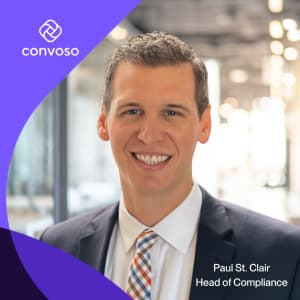
The following article is a repost from Technology Reseller News and written by Paul St. Clair, Head of Compliance at Convoso.

Contact rate is falling. Here’s why Salesforce isn’t enough in 2026
Outbound compliance used to sit squarely within a company’s legal or compliance function. List Re_ [Expert Insight] Contact Rate Is Falling. Here’s Why Salesforce Isn’t Enough in 2026 scrubbing, calling windows, and recordkeeping requirements. Meanwhile, revenue teams focused on volume, speed, and conversion.
Today, compliance directly influences deliverability. It affects whether calls connect, how carriers classify your traffic, and whether campaigns can scale without disruption. When compliance breaks down, performance follows.
As a result, what was once treated as a legal safeguard is now an operational dependency.
This shift is increasingly visible in conversations with telecom resellers. Customers are asking fewer questions about pricing and coverage and more about declining contact rates, spam labeling, and why their existing tools are not solving the problem.
In other words, compliance is no longer adjacent to performance. It is part of the system that determines it.
The CRM gap: harder to ignore
Standard CRMs like Salesforce are strong at governance and recordkeeping, but stall at the execution layer, where outbound performance is determined. They can store consent, log activity and provide reporting but not necessarily in real time.
Key gaps include a lack of control over pacing, attempt logic, and calling windows, as well as limited enforcement of consent and DNC rules during live dialing. Reporting is retrospective rather than real-time, which limits a team’s ability to adjust campaigns while they are running. These gaps create friction for high-velocity outbound teams that need precision and adaptability at scale.
Another issue is dialing stability. When pacing fluctuates, agents bounce between idle time and overload. Contact rates become unpredictable. And compliance risk increases as rules are often applied unevenly.
Stable dialing changes that. It creates consistent pacing, predictable outcomes, and better adherence to compliance thresholds.
Fragmentation a drag on results
Outbound programs are often run on more than one system. Call centers often rely on a stack where each piece may work on its own, but together they present a fragmented picture. When something goes wrong, it’s hard to pinpoint the cause.
Data delays can make this worse. By the time problems are figured out, the opportunity to fix them has already passed.
This is becoming a bigger problem with the expansion of state-level regulations. What used to be a simple set of rules is now a patchwork of requirements around consent, timing and outreach methods.
Compliance must now be applied dynamically, based on location and conditions, at the exact moment a call is placed. This is something manual processes or loosely connected tools can handle.
For telecom resellers, this is where the opportunity is emerging. It’s not necessarily replacing CRM systems but putting something new on top of it.
New execution layer
The next generation of outbound solutions is the execution layer. It connects to systems like Salesforce but adds real-time control, dynamic compliance, and full visibility into what’s happening as campaigns run.
With compliance built directly into dialing, protection runs automatically. Calls stay within rules, dialing and contact rates stabilize and carrier filtering risk decreases.
This leads to more stable contact rates, reduced risk of carrier filtering, and faster speed-to-lead without manual intervention. Campaigns become more predictable, making it far easier to forecast and optimize performance.
The new layer also strengthens audit defensibility by ensuring that rules are applied consistently and automatically, reducing human error. Over time, this approach allows revenue teams to scale outbound efforts confidently, knowing that compliance is actively protecting both performance and brand reputation.
Call centers don’t just need lines and minutes. They need help making outbound work again. It’s no longer about how many calls you make. It’s about how many of them actually connect.
About Paul St. Clair
Paul St. Clair, J.D., is the Head of Compliance at Convoso, where he drives regulatory strategy and a culture of compliance. With over a decade of experience in regulatory and government affairs in the tech and telecom industries, Paul has created and implemented programs on a variety of issues such as robocalls, cybersecurity, and procurement. He strives to build on Convoso’s capabilities to grow the company’s reputation as an industry leader in compliance. Paul’s experience prior to Convoso includes work at Windstream, the Federal Communications Commission, and Microsoft.
About Technology Reseller News
Technology Reseller News reports on AI, vCons, UC, UCaaS, CPaaS, CCaaS, real-time cloud communications plus news and information on hybrid and prem networks.
Schedule a demo
Supercharge your sales with our AI-powered contact center platform.