

The FCC’s Expanding Robocall Strategy Is Reshaping the Calling Ecosystem
 Convoso
The FCC’s approach to robocall enforcement is evolving quickly — and the agency’s recent actions suggest the industry may be entering a new regulatory era.
In recent commentary shared by Convoso Head of Compliance Paul St. Clair, several recent FCC actions point to a broader shift in how regulators are approaching robocall mitigation, caller trust, and telecom accountability across the entire call path.
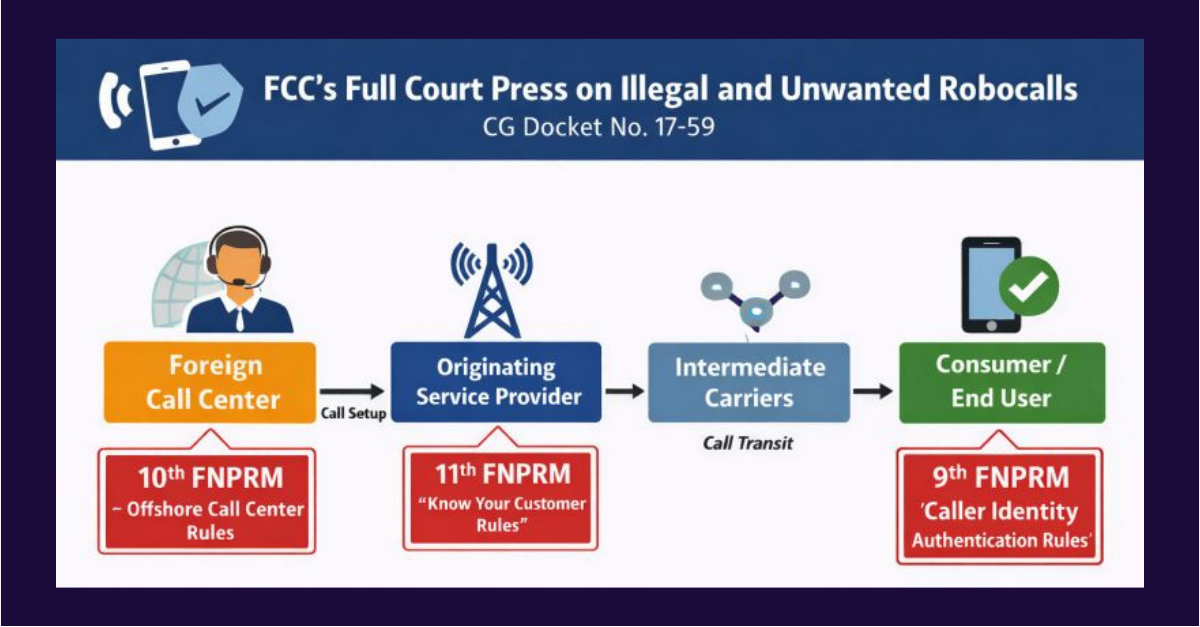
Rather than focusing narrowly on isolated technical requirements, the FCC is increasingly examining the full communications ecosystem — from the call originator to carriers, providers, infrastructure, and ultimately the consumer experience itself.
At a glance
The FCC has introduced three major robocall-related FNPRMs in roughly six months.
Regulators are shifting focus from simple caller authentication toward broader identity verification and consumer trust.
Recent proposals address Rich Call Data (RCD), offshore call centers, numbering access, and enhanced KYC obligations.
The FCC is increasingly placing responsibility on providers and the broader telecom ecosystem — not just callers.
Outbound operators should prepare for evolving compliance expectations and operational changes over the next several years.
The FCC’s “fresh approach” began in October 2025
According to St. Clair, a major turning point came in October 2025, when the FCC adopted what it described as a “fresh approach” to combating illegal and unwanted robocalls.
At the center of that effort was the FCC’s Ninth Further Notice of Proposed Rulemaking (FNPRM) in CG Docket No. 17-59.
The proposal focused heavily on consumer trust — not simply whether a caller has the technical right to use a phone number, but whether consumers can confidently identify who is actually calling them.
“The Commission took a step back and looked at the broader picture, taking into account the whole call path from the call originator to the consumer, and everything in between,” St. Clair noted.
The Ninth FNPRM proposed several approaches aimed at improving caller identity transparency, including:
Rich Call Data (RCD)
expanded caller identity verification concepts
potential labeling requirements for foreign-originated calls
Industry advocacy groups, providers, and other stakeholders continue debating the proposal’s broader implications as the FCC reviews feedback submitted during the comment period.
Industry organizations such as R.E.A.C.H. (Responsible Enterprises Against Consumer Harassment) continue advocating on behalf of businesses involved in lead generation and direct-to-consumer marketing as the rulemaking process evolves.
The FCC Is expanding its focus across the entire call path
The Ninth FNPRM appears to have been only the beginning.
At the FCC’s March 2026 Open Meeting, the Commission advanced additional proposals through a Tenth FNPRM that expanded regulatory attention even further up the call chain.
These proposals included:
new scrutiny around offshore call centers
possible language proficiency requirements
additional operational obligations
restrictions tied to access to numbering resources
The Commission also adopted measures aimed at modernizing telecom infrastructure, in part to better support anti-robocall technologies moving forward.
“The FCC looked all the way up the call path,” St. Clair observed in his recent analysis.
Enhanced KYC expectations increase pressure on service providers
Most recently, the FCC released a draft proposal focused on enhanced “Know Your Customer” (KYC) obligations for service providers.
The proposed rules would significantly increase expectations around provider oversight and customer vetting processes — an area the telecom industry has historically treated as a critical first line of defense against bad actors.
“The new NPRM brings the FCC’s expectations on this process into sharp focus,” St. Clair said.
If adopted, the KYC proposal would become the third major FCC robocall-related rulemaking effort introduced in less than six months.
What this means for outbound operators
Taken together, these actions signal that the FCC is moving toward a much broader framework for robocall mitigation and telecom accountability.
The agency is no longer concentrating solely on technical caller authentication standards. Instead, regulators appear increasingly focused on establishing trust and accountability throughout the entire communications ecosystem — including carriers, providers, numbering access, customer verification, and infrastructure modernization.
For operators, these proposals could eventually affect onboarding standards, provider relationships, call transparency requirements, offshore operations, and how trust is established throughout the outbound calling process.
For outbound operators, contact centers, and telecom providers, the implications could be significant.
Established operational and compliance structures may evolve substantially over the next several years as these proposals advance through the rulemaking process.
“Operators should pay attention to each of these developments because longstanding frameworks may look a lot different in a year or two,” St. Clair noted.
Stay Ahead of Compliance Changes
Regulatory expectations around outbound calling continue to evolve rapidly. Subscribe to Convoso’s monthly compliance newsletter for updates and analysis on emerging regulations, KYC requirements, robocall mitigation policies, and developments impacting outbound contact centers.
Subscribe to Compliance Updates
About Compliance Watch
Compliance Watch is a recurring Convoso blog series covering regulatory developments impacting outbound calling, telecom compliance, and contact center operations. Insights in this article include commentary from Convoso Head of Compliance Paul St. Clair.
What Operators Need to Know
The FCC’s Ninth Further Notice of Proposed Rulemaking (FNPRM) proposes new approaches to caller identity verification and consumer trust in the calling ecosystem. The proposal explores measures such as Rich Call Data (RCD) and foreign call labeling requirements.
The FCC’s latest draft proposal would increase “Know Your Customer” (KYC) expectations for service providers, placing greater responsibility on telecom companies to identify and prevent bad actors from accessing networks.
If adopted, the proposals could affect caller identity practices, provider onboarding requirements, numbering access, offshore operations, and broader compliance obligations across the outbound calling ecosystem.
Most of the recent FCC actions discussed are still in the proposed rulemaking stage, with active comment periods and ongoing industry feedback.
Schedule a demo
Supercharge your sales with our AI-powered contact center platform.